
explore the symposium legacy
The Final ASPIS Open Symposium
Explore the presentations and posters from the Symposium!
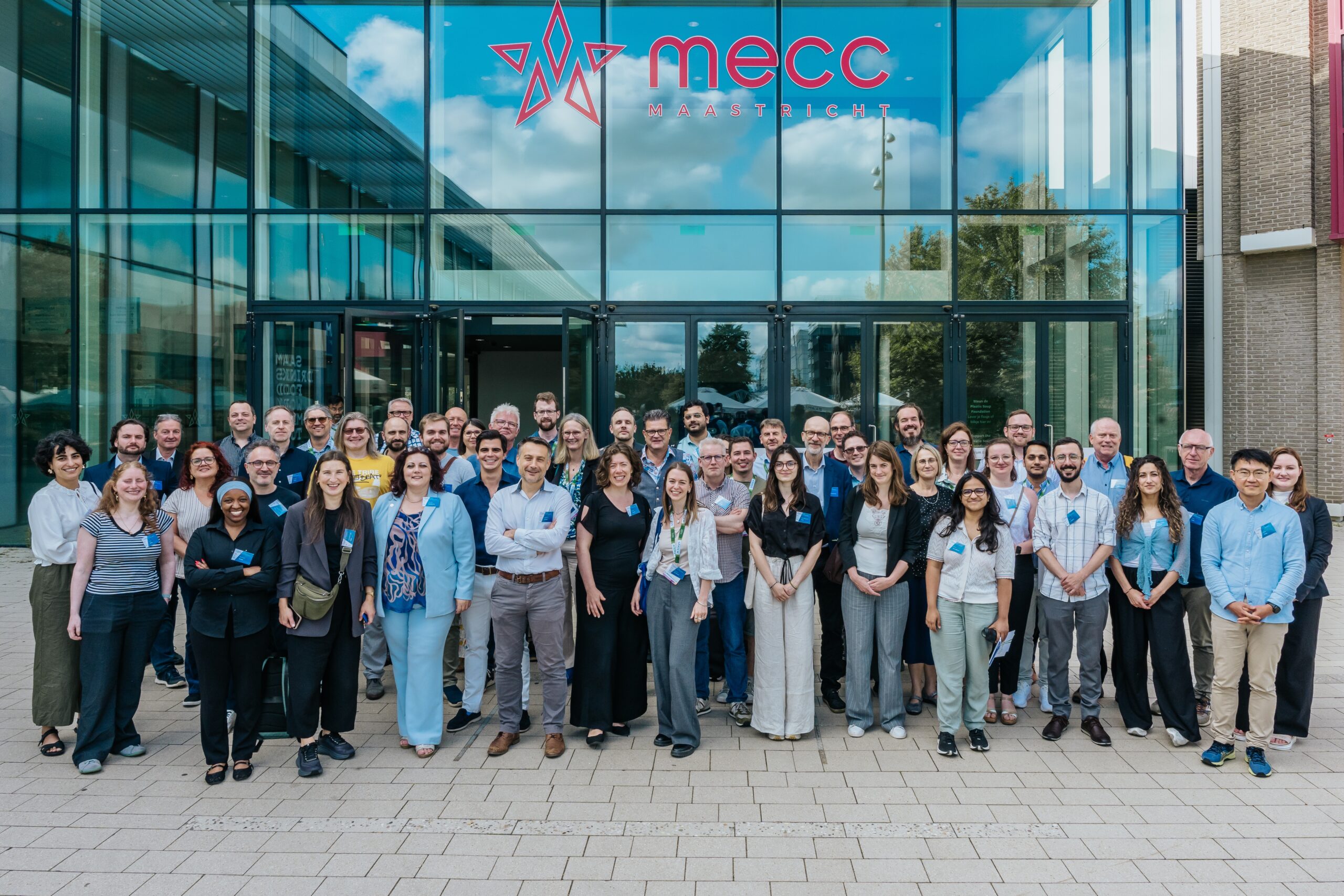
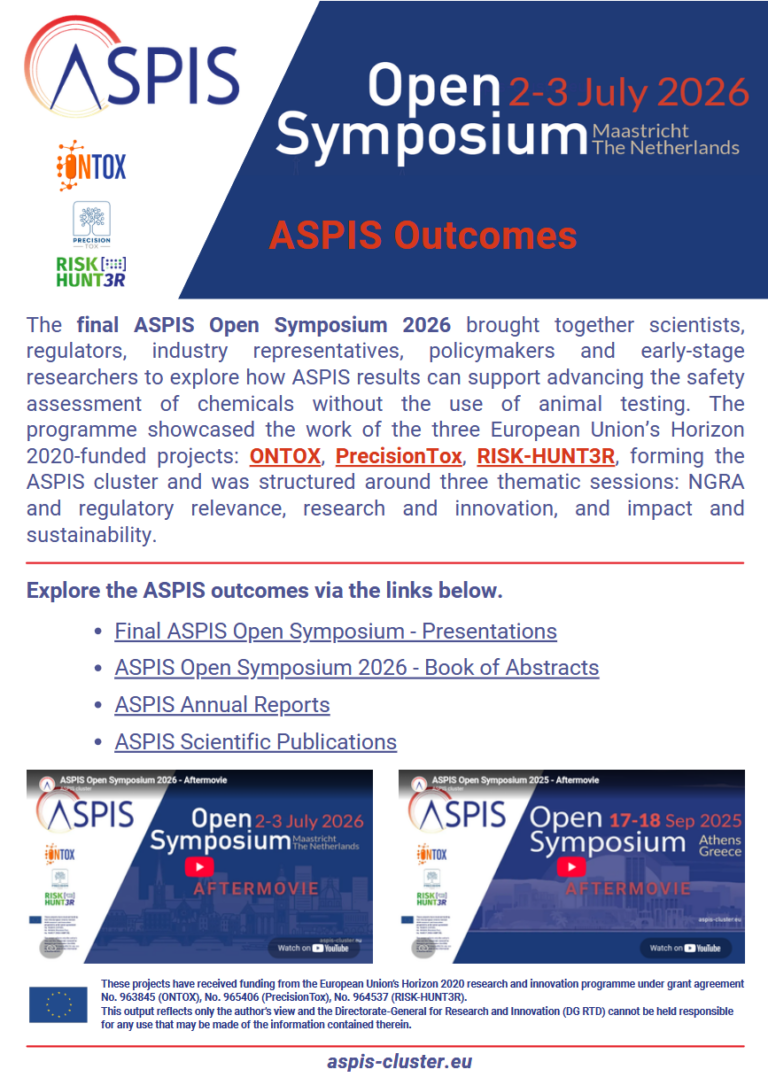
The Final ASPIS Open Symposium brought together scientists, regulators, industry representatives, policymakers and Early-Career Researchers to explore how ASPIS results can support lasting change in chemical safety assessment.
The programme showcased the work of the three Horizon 2020 projects forming the ASPIS cluster and was structured around three thematic sessions: Next Generation Risk Assessment and regulatory relevance, research and innovation, and impact and sustainability.
Early-Career Researchers contributed through scientific flash presentations and poster sessions. The Symposium was followed by an ASPIS Academy workshop on Good In Vitro Method Practices (GIVIMP).
Presentations and posters
Session 1 – NGRA and regulatory relevance
Session 2 – Research and innovation
- Kopanska K. – ONTOX Probabilistic Risk Assessment (OPRA): An AI-enabled framework
- Callegaro G. – The TXG MAPr toolbox: qualitative and quantitative interpretation of toxicogenomics data
- Hongisto V. – Quantitative assessments of population-level susceptibility to toxicity: relevance to humans and wildlife
Session 3 – Impact and sustainability
- Ortega Vallbona R. – The ASPIS Academy: Empowering the next generation of toxicologists
- Schwab Ch. H. – ONTOX: Innovative Services for Chemical Safety
- van de Water B. – RISK-HUNT3R: Innovations and test methods for IATA-based NGRA
- Kopanska K. – ASPIS Risk Assessment Task Force: Advancing NGRA through collaboration
- Vinken M. – Securing ASPIS sustainability through collaboration
- Vinken M. – EU-funded NAM research: future perspectives
- van de Water B. – Outlook for NAM-based NGRA
- Raemaekers T. – EU initiatives on NAMs
Flash presentations
- Sinke L. – Enhancing mechanism-based neurotoxicity evaluations with in vitro LUHMES cells and gene network analysis
- Wolfbeisz Ch. – Human iPSC-derived glial cells for functional inflammatory assays and toxicity testing
- Lodhi S. – R-ODAF-Shiny : A Web-Based Tool for RNA-seq Analysis and Reporting
- Ladeira L. – Accelerating physiological map construction through Natural Language Processing-assisted text mining and curation
- Patyra K. – Estimation of intra-specific ranges of genetic susceptibility to toxicity using genetically diverse populations of human lymphoblastoid cell lines
Posters
- Llobet-Serra E. – The Way Out: Implementation of an ECCS-based tool for predicting xenobiotic major elimination pathways
- López-Pascual E. – AI-Supported Analysis of DILI Phenotypes Reveals Drug-Specific Clinical Patterns While Steatosis Remains Asymptomatic
- Ortega-Vallbona R. – The ASPIS Academy: Empowering the next generation of toxicologists
- Kanďárová H. – Ensuring Research Integrity in ONTOX Through Systematic Audits of In Vitro and In Silico Workflows
- Kanďárová H. – ASPIS Communication and Dissemination: Building a Unified European Voice for Animal-Free Safety Assessment
Want to know more about the project
Get in touch with our team and share your questions
