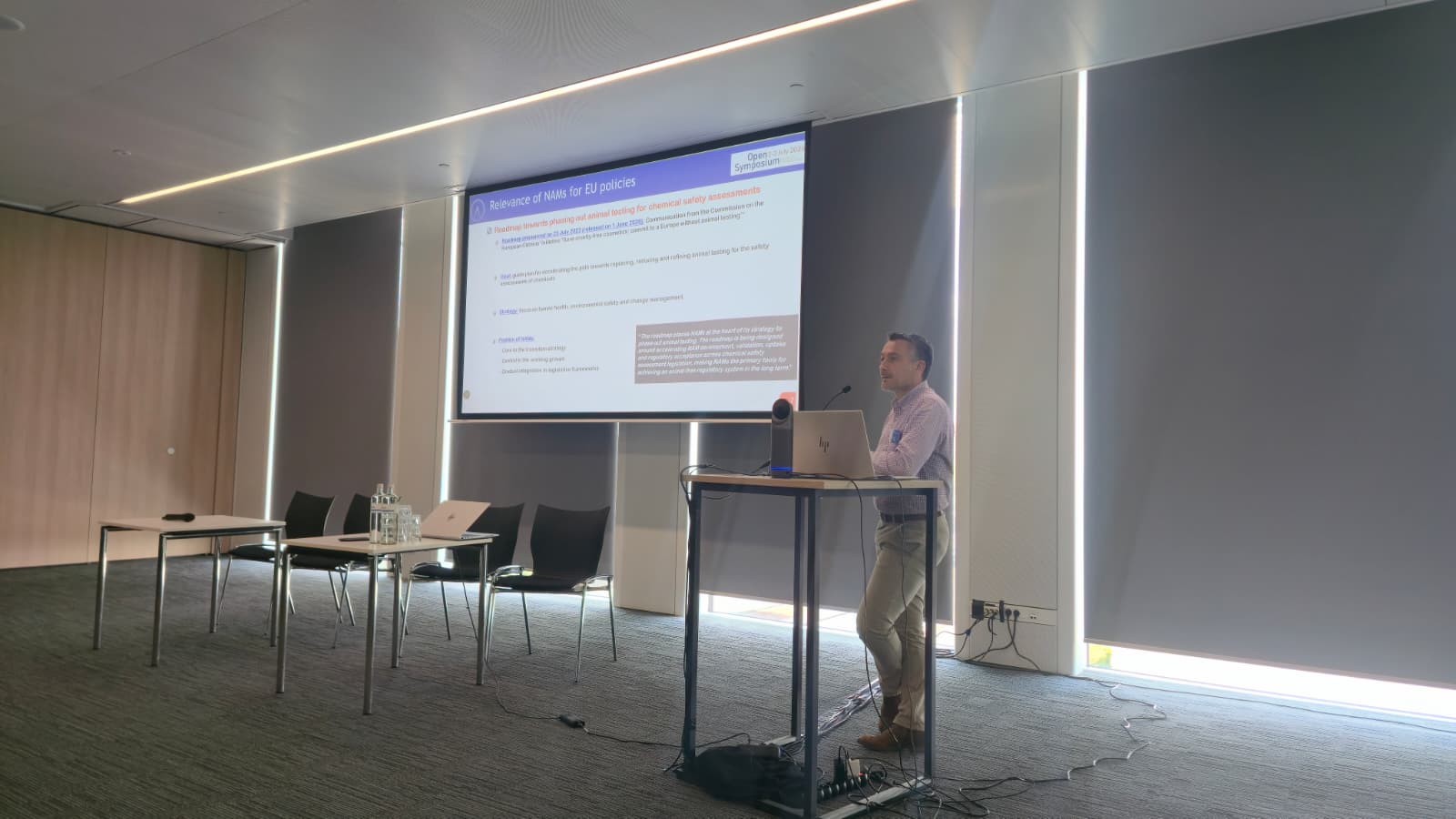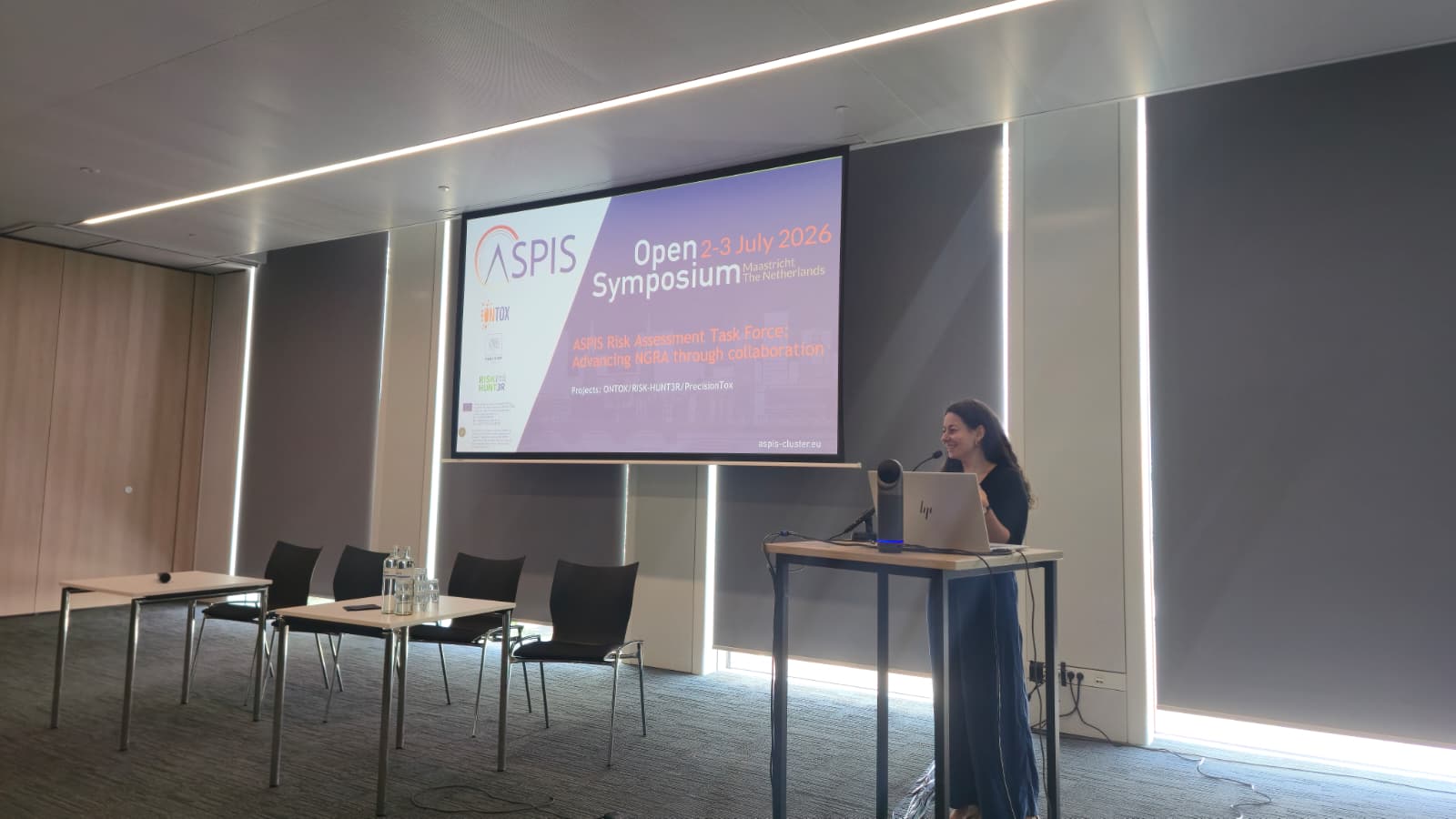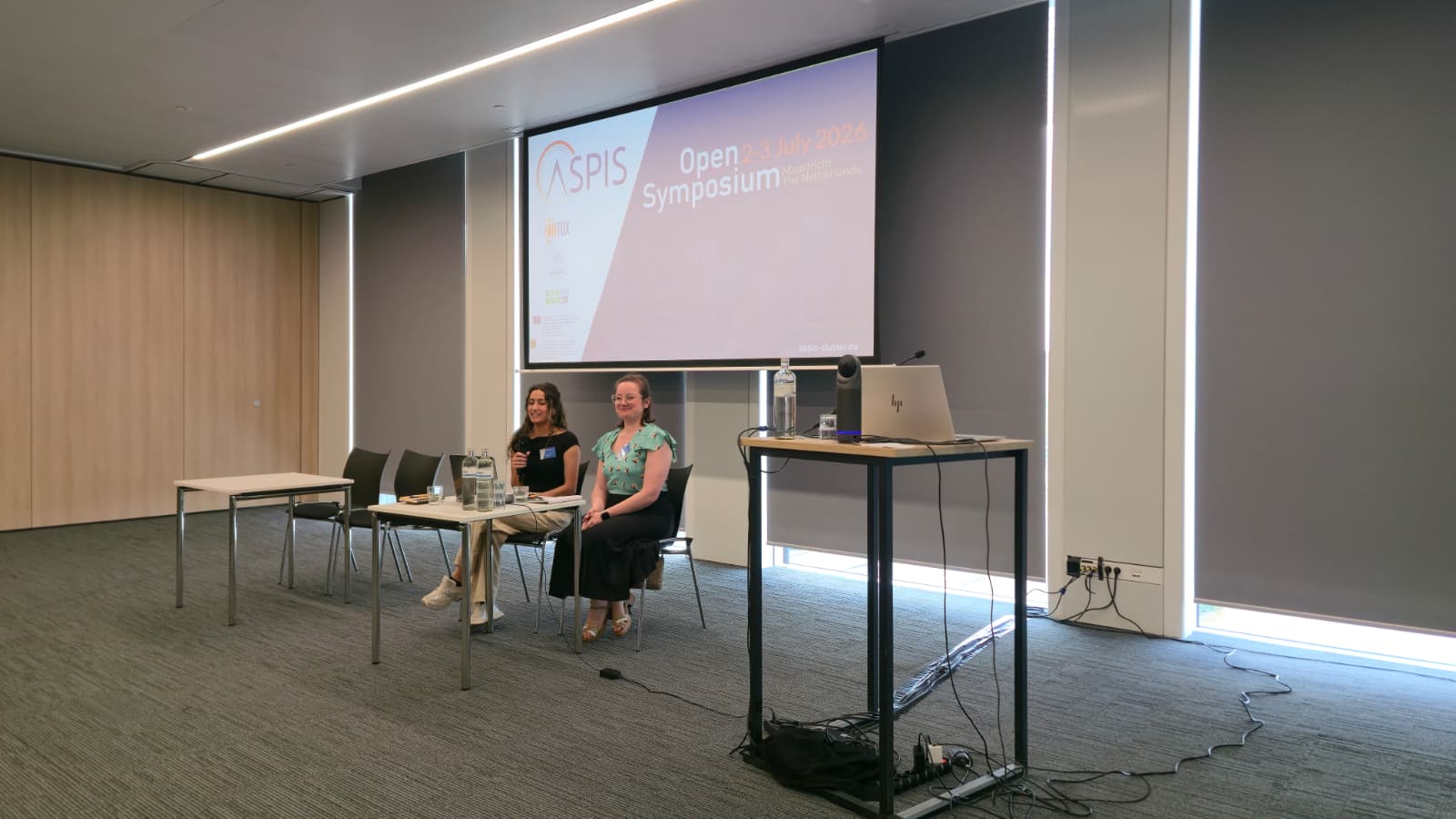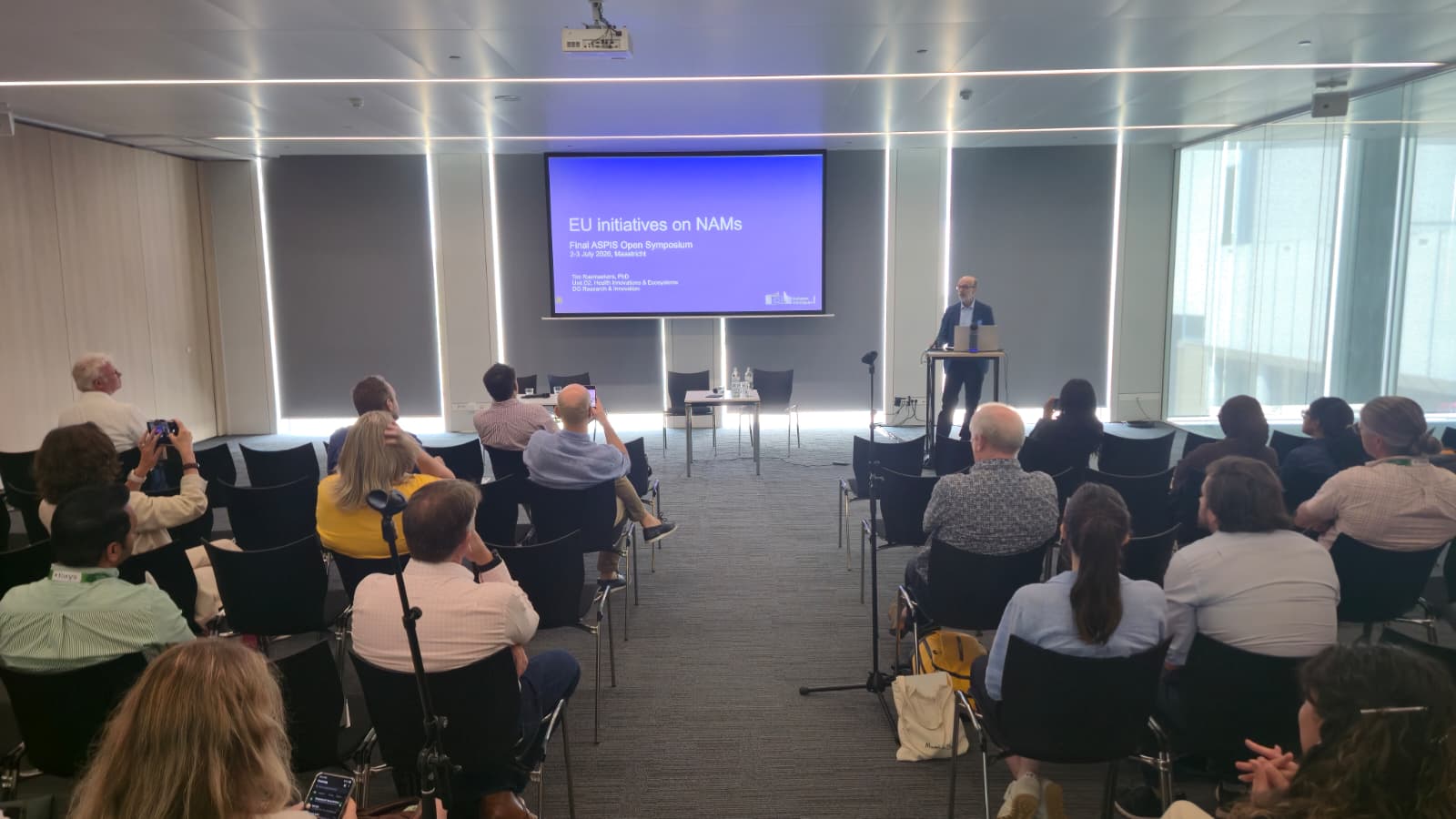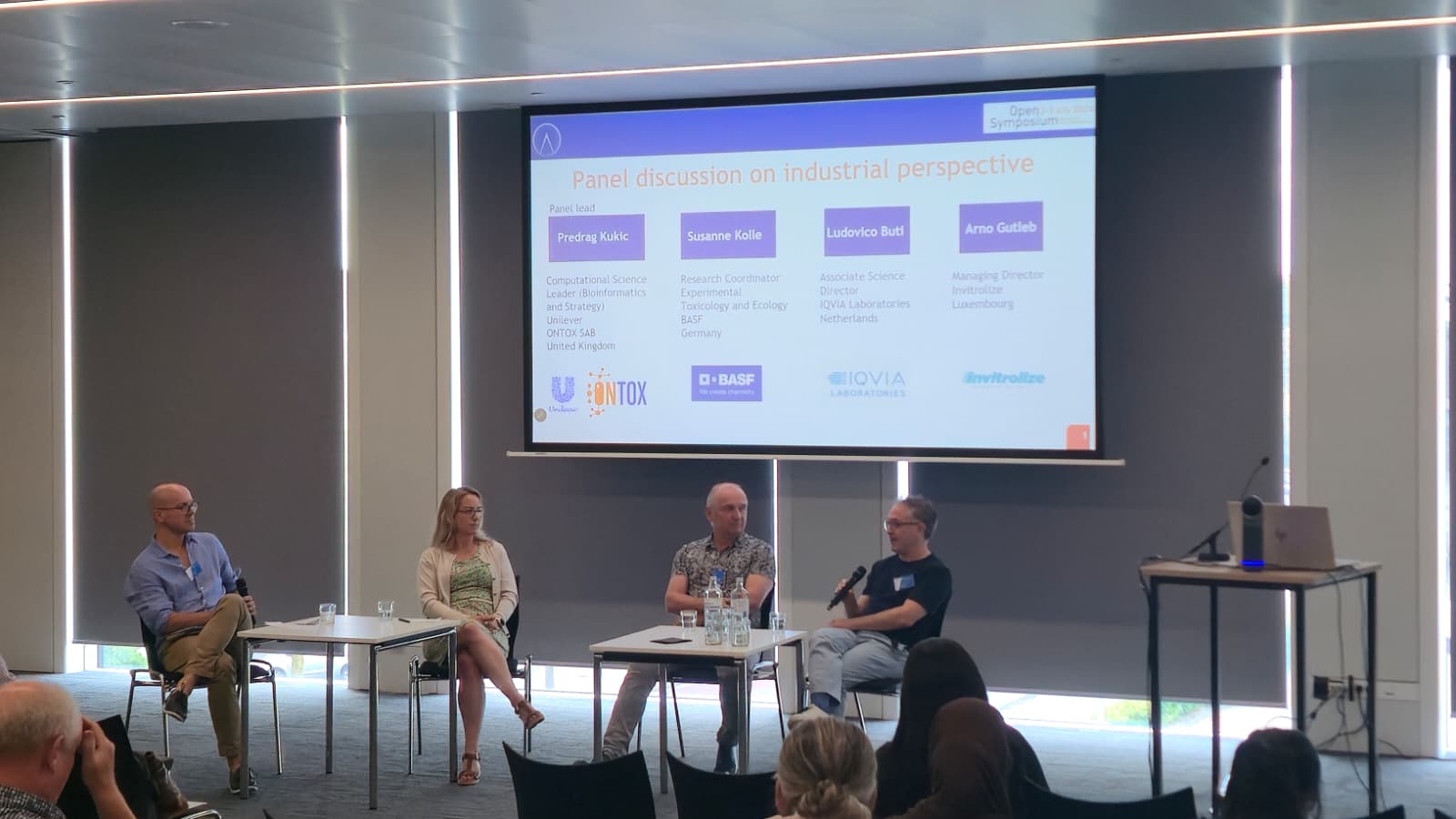
Maastricht, the Netherlands – 6 July 2026: The ASPIS cluster, a pioneering collaboration of three EU-funded research projects, concluded its fifth and final Open Symposium on 2–3 July 2026 in Maastricht, the Netherlands. Scientists, regulators, industry experts and Early-Career Researchers came together to mark the culmination of more than five years of coordinated research and collaboration aimed at transforming chemical safety assessment through the development and implementation of innovative, human-relevant approaches that reduce and ultimately replace the use of laboratory animals.
In its fifth and final edition, the ASPIS Open Symposium marked an important transition: from building the scientific foundations of next-generation, animal-free chemical safety assessment to supporting their implementation and regulatory uptake.
“The recent ASPIS Open Symposium once again demonstrated the strength of collaboration across science, regulation, industry, and policy in accelerating the transition to next-generation approaches for chemical safety assessment. I would like to thank all speakers, participants, and partners for their inspiring contributions and constructive discussions, which will help translate scientific innovation into regulatory impact. Together, we are building the evidence, partnerships, and momentum needed to achieve safer, more sustainable, and animal-free chemical safety assessment in Europe,” Prof. Mathieu Vinken, ASPIS Cluster Coordinator (2024–2026), Coordinator of the ONTOX project, Vrije Universiteit Brussel.
Structured around three thematic sessions — Next Generation Risk Assessment (NGRA) and Regulatory Relevance; Research and Innovation; and Impact and Sustainability — the programme showcased some of the cluster’s flagship scientific outputs and approaches.
These included ASPA (Alternative Safety Profiling Algorithm), ONTOX AI-enabled Probabilistic Risk Assessment (OPRA) frameworks, toxicogenomics tools, advanced in vitro models, computational approaches, and FAIR-by-design open datasets developed to remain accessible and reusable by researchers and regulators beyond the lifetime of the projects.
Panel discussions featuring representatives of regulatory agencies, industry, academia and policy explored practical pathways towards the wider uptake of New Approach Methodologies (NAMs). The discussions highlighted both the substantial scientific progress achieved during the lifetime of ASPIS and the remaining challenges associated with validation, standardisation, regulatory acceptance and implementation.
“ASPIS has shown that New Approach Methodologies can move from conceptual promise to regulatory-relevant solutions. By combining mechanistic toxicology, advanced in vitro systems, and computational modelling, ASPIS has strengthened the scientific foundation needed to reduce animal testing with a vision to replace it, in line with the EU roadmap. The legacy of ASPIS is the scientific and collaborative foundation that will continue to accelerate the transition toward human-relevant toxicology in Europe and beyond,” commented Dr Tim Raemaekers, ASPIS OS 2026 Invited Speaker and Policy Officer, European Commission, DG Research & Innovation.
A defining thread running throughout the ASPIS Open Symposium 2026 was the contribution of Early-Career Researchers (ECRs) and the ASPIS Academy — the cross-project network established to support the next generation of toxicologists through training, mentoring, scientific exchange and twinning placements. ECRs presented their research through poster sessions and competitive flash oral presentations, culminating in the ASPIS 2026 Oral Presentation and Poster Awards.
ASPIS OS 2026 – Awards
Panel discussions featuring representatives of regulatory agencies, industry, academia and policy explored practical pathways towards the wider uptake of New Approach Methodologies (NAMs). The discussions highlighted both the substantial scientific progress achieved during the lifetime of ASPIS and the remaining challenges associated with validation, standardisation, regulatory acceptance and implementation.
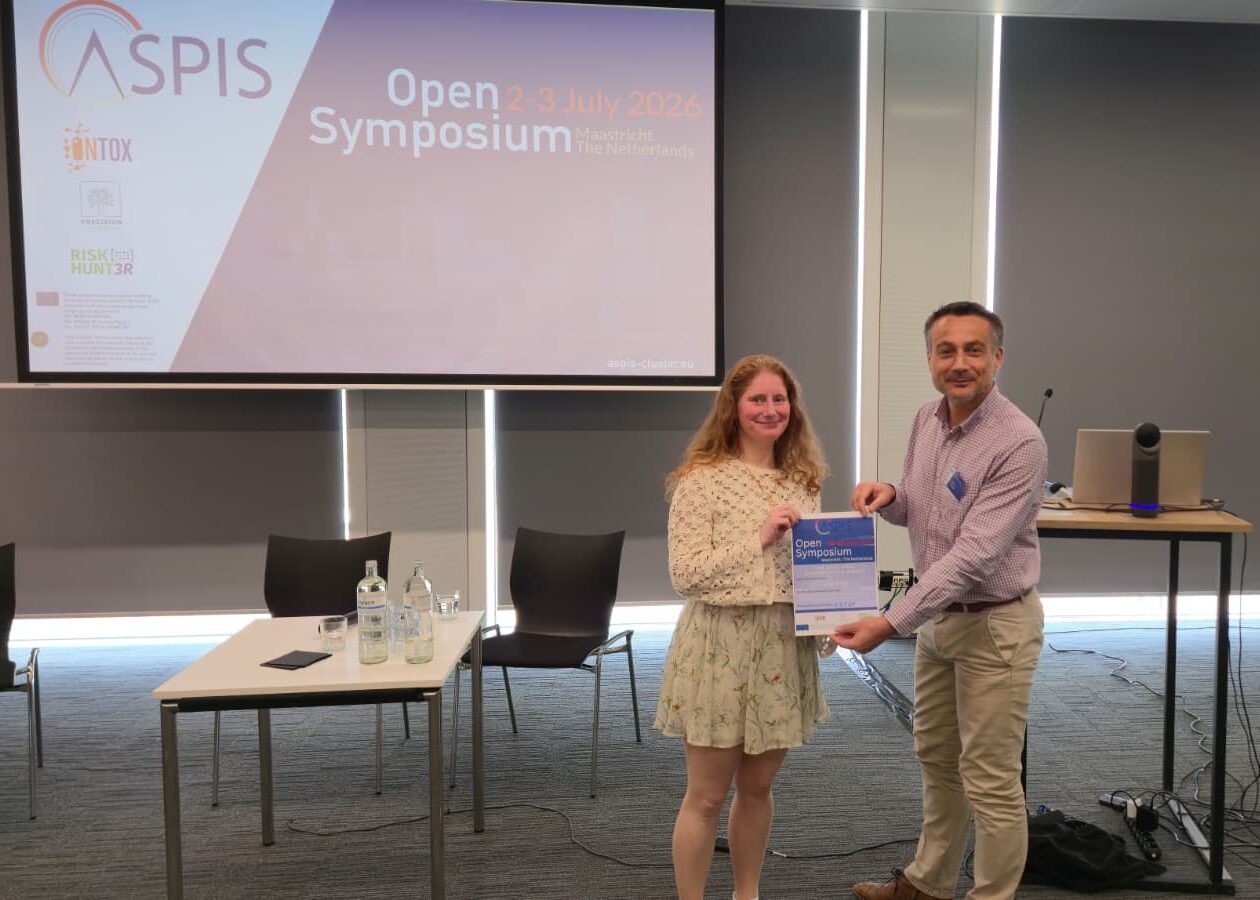
From left: Lucy Sinke, Mathieu Vinken
The Best Oral Presentation Award was presented to Lucy Sinke (Leiden University, RISK-HUNT3R) for her presentation: “Enhancing mechanism-based neurotoxicity evaluations with in vitro LUHMES cells gene network analysis.”
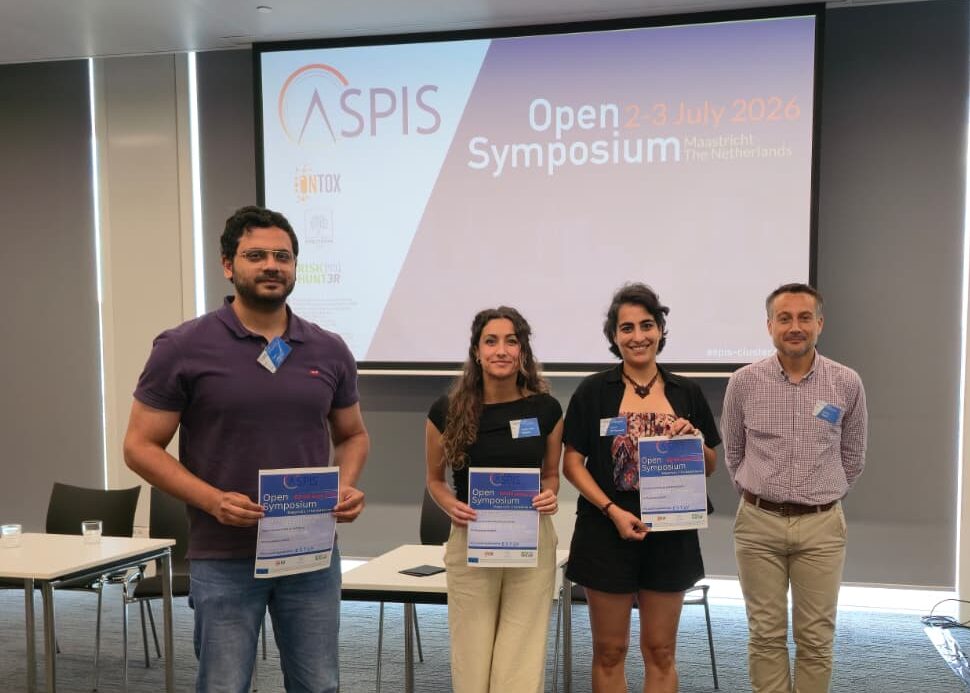
From left: Saad Lodhi, Mahshid Alimohammadi, Shaleen Marie Glasgow, Mathieu Vinken
The Best Poster Awards were presented to:
- ONTOX: Saad Lodhi (Maastricht University) – “R-ODAF-Shiny: An interactive and reproducible transcriptomics analysis framework for regulatory application.”
- RISK-HUNT3R: Mahshid Alimohammadi (University of Konstanz) – “A generalizable approach to establish neurotoxicity assays with heightened sensitivity for mitochondrial toxicants.”
- PrecisionTox: Shaleen Marie Glasgow (University of Birmingham) – “Comparative Single Cell Transcriptomics of Daphnia and Biomedical Models to Uncover Evolutionarily Conserved Tissue-Specific Responses to Environmental Toxicants.”
The scientific programme was followed by a post-symposium ASPIS Academy Workshop on Good In Vitro Method Practices (GIVIMP), highlighting the OECD framework for ensuring the quality, reliability, and reproducibility of in vitro methods intended for scientific and regulatory applications. As ASPIS comes to a close, its legacy lies not only in its scientific outputs, tools, datasets, and methodologies, but also in the community it has created.
Over more than five years, the cluster has helped build a strong European foundation for ethical, sustainable, and human-relevant chemical safety assessment. By connecting researchers, regulators, industry experts, policymakers, and young scientists around a shared ambition, ASPIS has strengthened the scientific capacity and collaborative networks needed to make modern non-animal approaches increasingly fit for future decision-making on the safety of chemicals and pharmaceuticals in the European Union.
The conclusion of ASPIS therefore represents not simply the end of three major European research projects, but the beginning of the next phase: translating scientific advances into sustained regulatory impact and ensuring that the knowledge, infrastructure, and community created by ASPIS continue to shape the future of chemical safety assessment in Europe and beyond.