
Konrad Patyra, Senior Scientist at Misvik Biology, is the winner of the ASPIS Academy Photo Competition. His winning photograph captures a striking moment in the lab while telling a much larger story about genetically diverse, human-relevant chemical safety testing. As the competition winner, Konrad received a registration fee waiver for the ESTIV 2026 Congress.
The winning photo:
One Billion Voices in a Flask: The Human Side of Chemical Safety
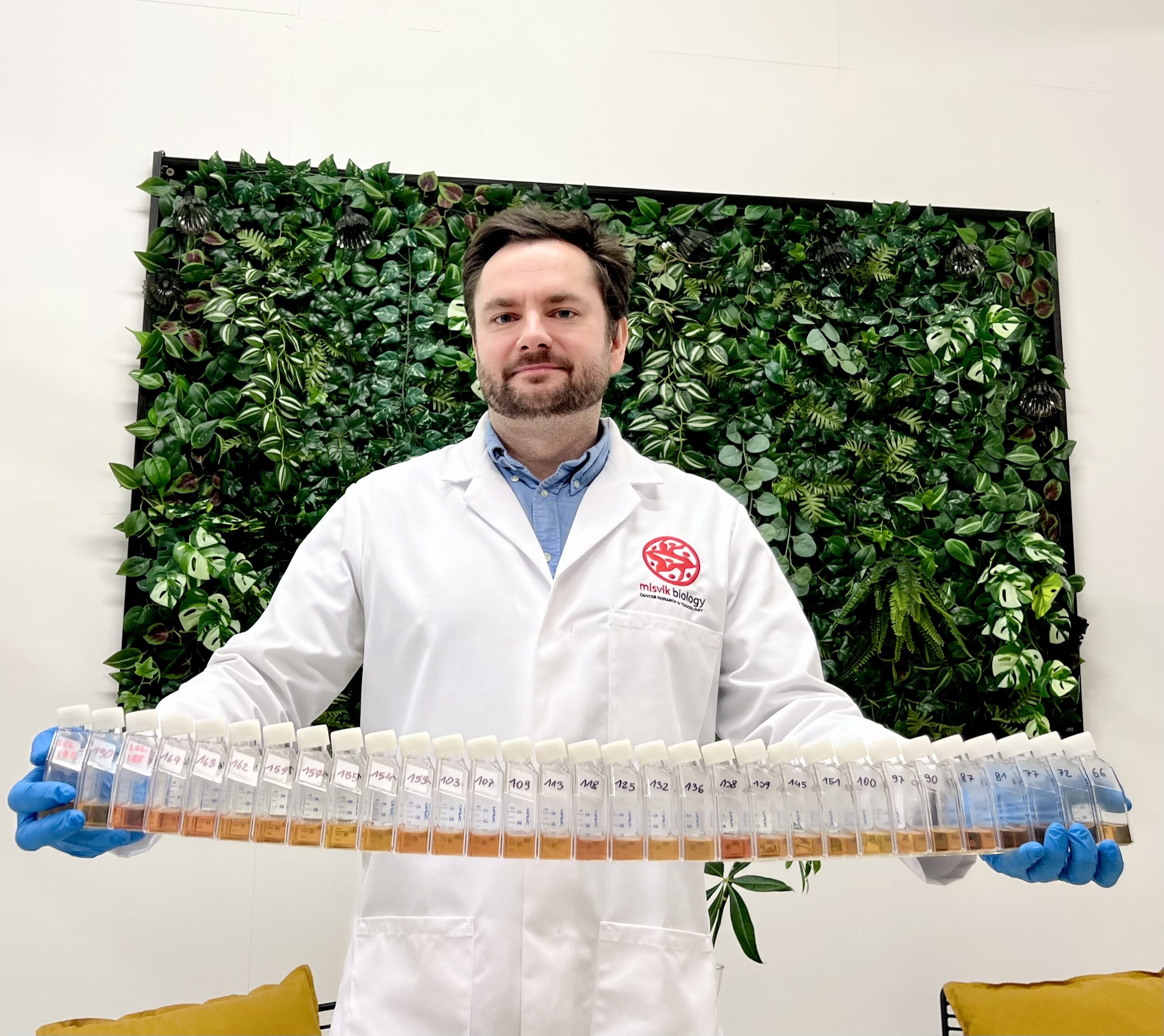
“Every flask is a small step; every data point brings us closer to understanding why the same drug can save one person and harm another.”
The photograph that won the ASPIS Academy photo competition looks, at first glance, like a routine lab moment: a scientist holds 31 cell culture flasks carefully taped together, so none will fall. But what those flasks contain is far from ordinary.
Inside each one, tens of millions of living human cells — derived from donors across 5 major human populations and approximately 18 distinct ethnic groups. Together, they represent a fragment of a much larger ambition: to screen chemicals and drugs using cell lines that reflect the genetic diversity of over one billion people worldwide. Every flask is a small step. Every data point brings us closer to understanding why the same drug can save one person and harm another.
That question sits at the heart of precision toxicology, and it drives the daily work of Konrad Patyra as a Senior Scientist at Misvik Biology — a Finnish contract research laboratory founded in 2014, specialising in precision medicine, oncology, and drug development.
Serving biopharma companies and academic institutions across the globe, Misvik brings together high-throughput biology, next-generation sequencing, and AI-powered bioinformatics to deliver human-relevant answers about how drug candidates and chemicals behave in clinically realistic cell models. With over nine years of research experience spanning physiology, pharmacology, and molecular biology, Konrad joined that mission to help build the tools that make large-scale, genetically diverse safety testing possible.
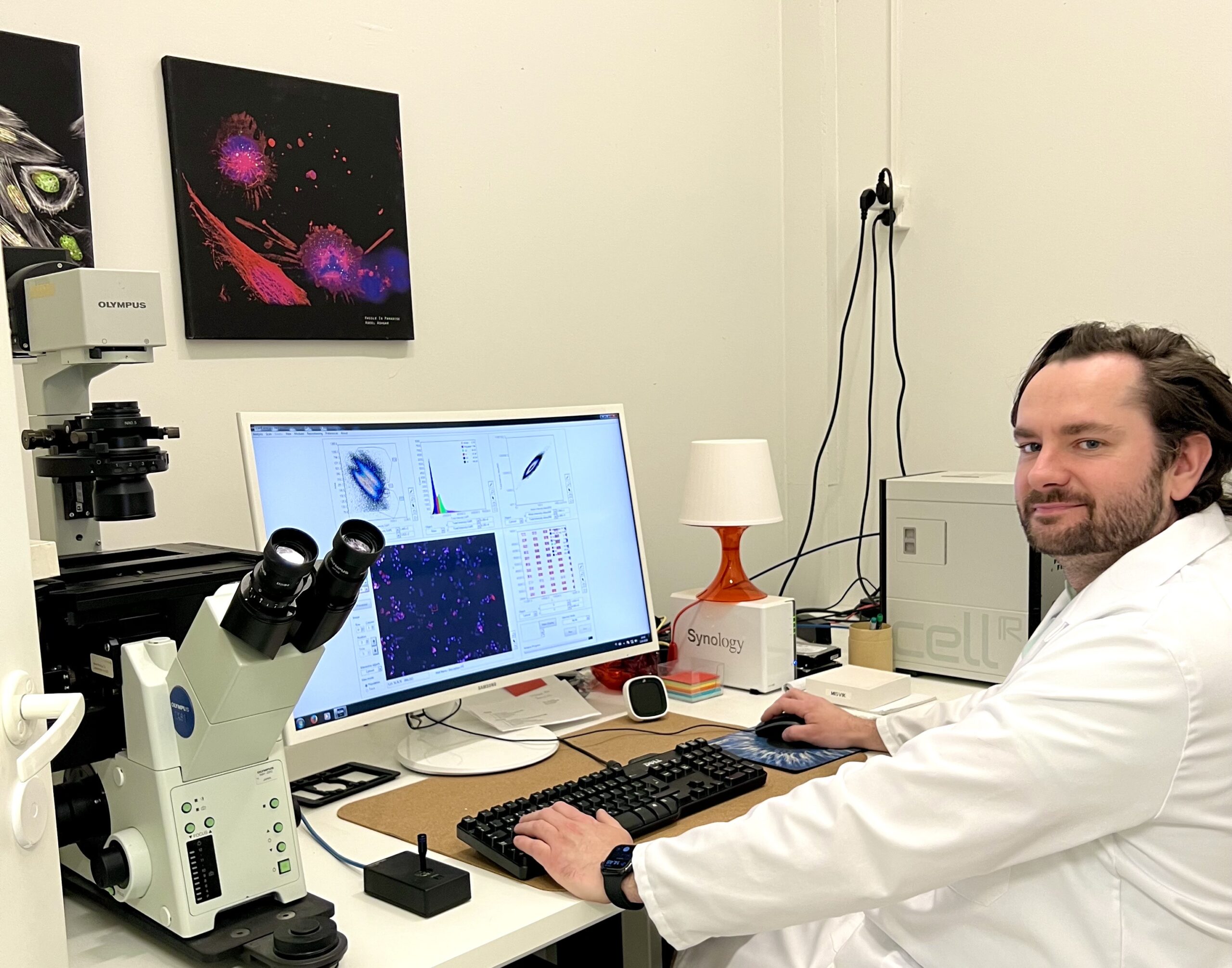
Konrad’s work centres on high-throughput screening: running large-scale cell-based assays to measure how drugs and environmental chemicals affect human biology across a wide range of genetic backgrounds. The goal is not just to flag what is toxic, but to understand the mechanisms behind toxicity and ultimately predict how individual genetic variation shapes each person’s response.
This work also feeds into several EU-funded research initiatives at the frontier of the field. In PrecisionTox, non-traditional test species were used to fundamentally rethink how chemical safety is assessed. Through HARMLESS and SABYDOMA, the focus shifts to nanomaterials and Safe-by-Design strategies: ensuring that novel materials are engineered with safety in mind from the earliest stages of development, not evaluated as an afterthought.
Underpinning all of it is a commitment to animal-free testing — using toxicogenomics, functional in vitro assays, and tools such as the Predictive Toxicogenomic Space and Tox5-score to generate mechanistically-grounded, human-relevant data faster and with greater translational value than conventional methods.

Konrad is a scientist who thrives on precision and performance — values that extend beyond the lab into his personal passions for motorsport, fitness, and technology. They all follow the same instincts: push the system, measure the output, and iterate until it works. Behind each assay and each cell culture is a real human genome and a real person whose response to a medicine is what Konrad is working to understand and, ultimately, to protect.
