From 25–27 November 2025, ASPIS cluster projects (ONTOX, RISK-HUNT3R and PrecisionTox) joined leading Korean researchers, policymakers, and students at the ChemBAI 2025 International Symposium, hosted at the University of Seoul (UOS).
The event brought together more than 150 participants to exchange on the fast-evolving landscape of Next Generation Risk Assessment (NGRA), New Approach Methodologies (NAMs), AI-enabled toxicology, and international regulatory cooperation.
Organised under the theme Korea–EU Horizon ASPIS NAMs Collaboration, the symposium marked a significant milestone in the deepening research partnership between Europe and Korea.

European ASPIS Expertise Featured Across the Programme
The symposium featured strong representation from the ASPIS cluster, contributing keynote lectures, scientific presentations, case studies, and policy discussions:
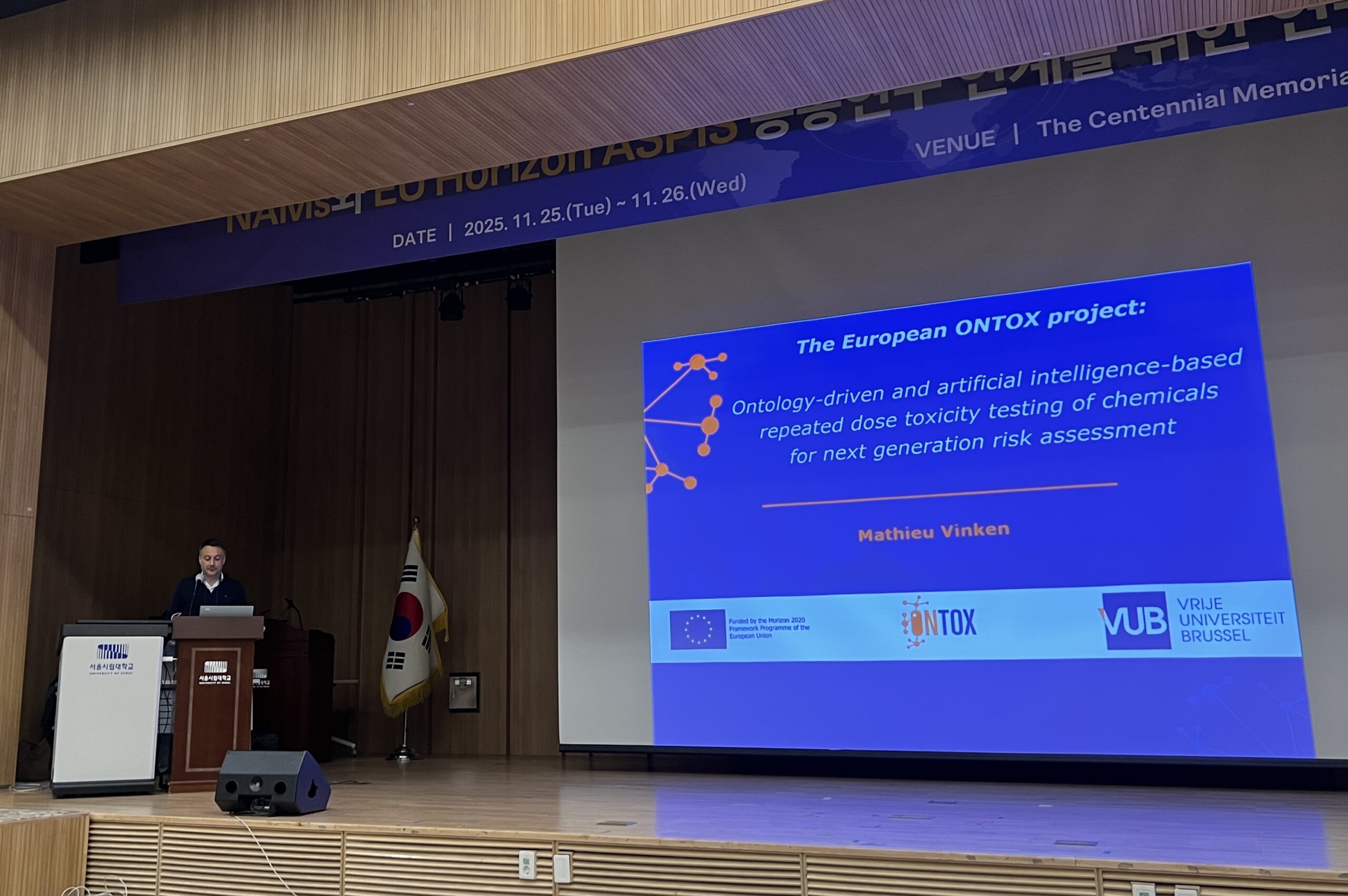
- Prof. Mathieu Vinken (Vrije Universiteit Brussel, ONTOX Coordinator and ASPIS Cluster Coordinator for 2024 – 2026)
- “The European ONTOX project: ontology-driven and artificial-intelligence-based repeated dose toxicity testing of chemicals for next generation risk assessment”
- “Adverse outcome pathways as the basis for setting up in vitro assays for chemical safety testing: liver toxicity as a case study”
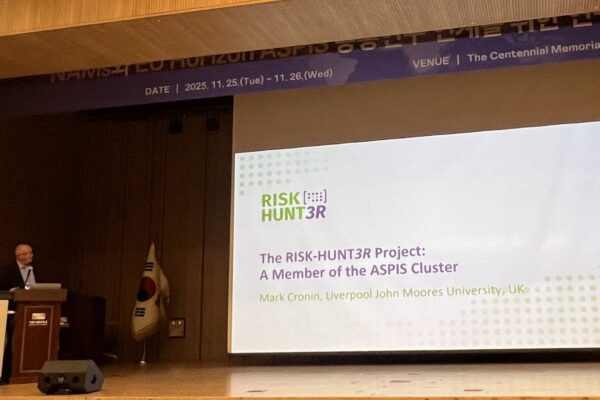
- Prof. Mark Cronin (Liverpool John Moores University, RISK-HUNT3R)
- “RISK-HUNT3R project – A member of the ASPIS cluster”
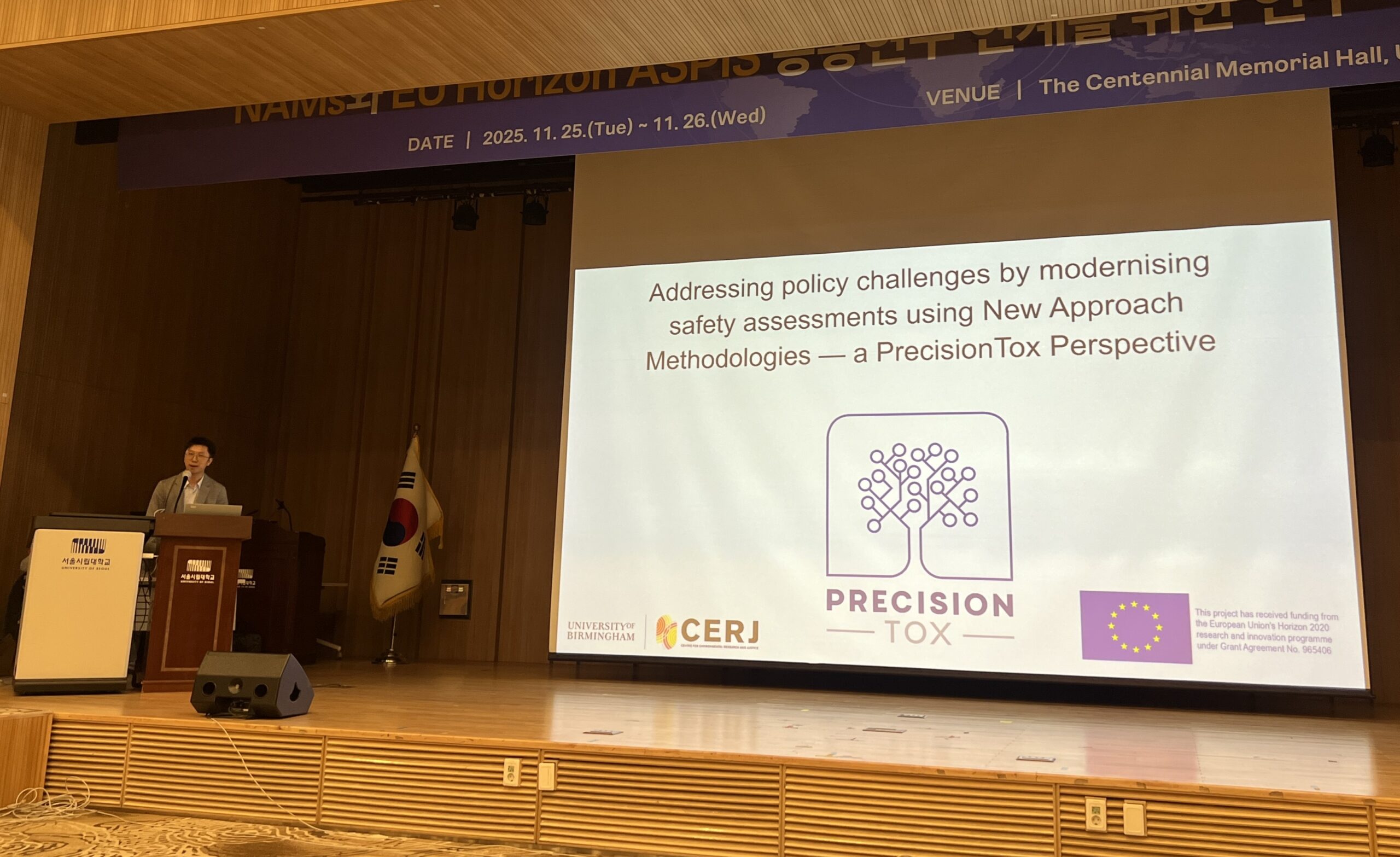
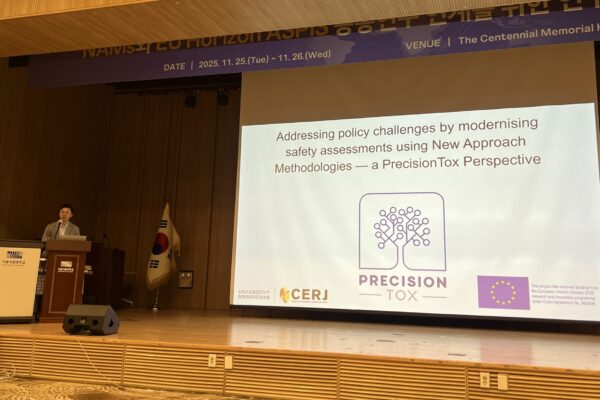
- Prof. Pu Xia (University of Birmingham, PrecisionTox)
- “Addressing policy challenges by modernising safety assessments using NAMs – A PrecisionTox perspective”
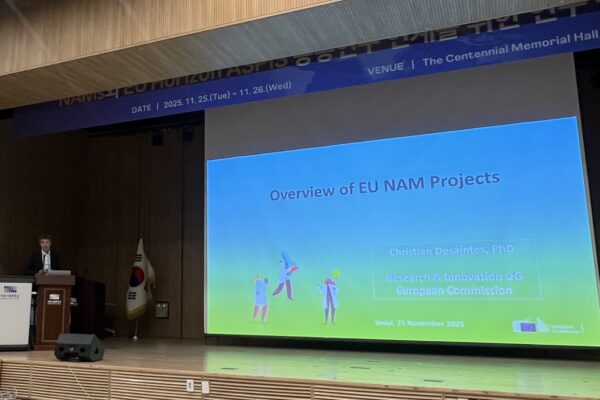
Moreover, Christian Desaintes (European Commission, DG Research & Innovation) shared an Overview of EU NAMs projects.
These contributions highlighted Europe’s cutting-edge efforts in mechanism-based safety assessment, digital toxicology, and the implementation of NAMs under the Horizon Europe scheme.
Prof. Mathieu Vinken (ASPIS Cluster Coordinator for 2024 – 2026) reflected on the importance of the growing Korea–EU partnership:
“Our collaboration with the University of Seoul is already yielding meaningful scientific exchanges, and ChemBAI 2025 further strengthened this partnership. By working together, Europe and Korea can accelerate the uptake of NAMs and NGRA worldwide, ensuring chemical safety assessments that are both human-relevant and future-proof.”
A Platform for Knowledge Exchange and Joint Vision Setting
Across two full days of lectures, panel discussions, and poster sessions, EU and Korean scientists explored shared priorities and emerging opportunities for collaboration. Topics included:
- AOP-based and mechanistic toxicology
- Integrated Approaches to Testing and Assessment (IATA) and NGRA frameworks
- Regulatory adoption of animal-free methods
- AI and digital infrastructures in hazard and risk assessment
- Horizon Europe research opportunities for Korean partners
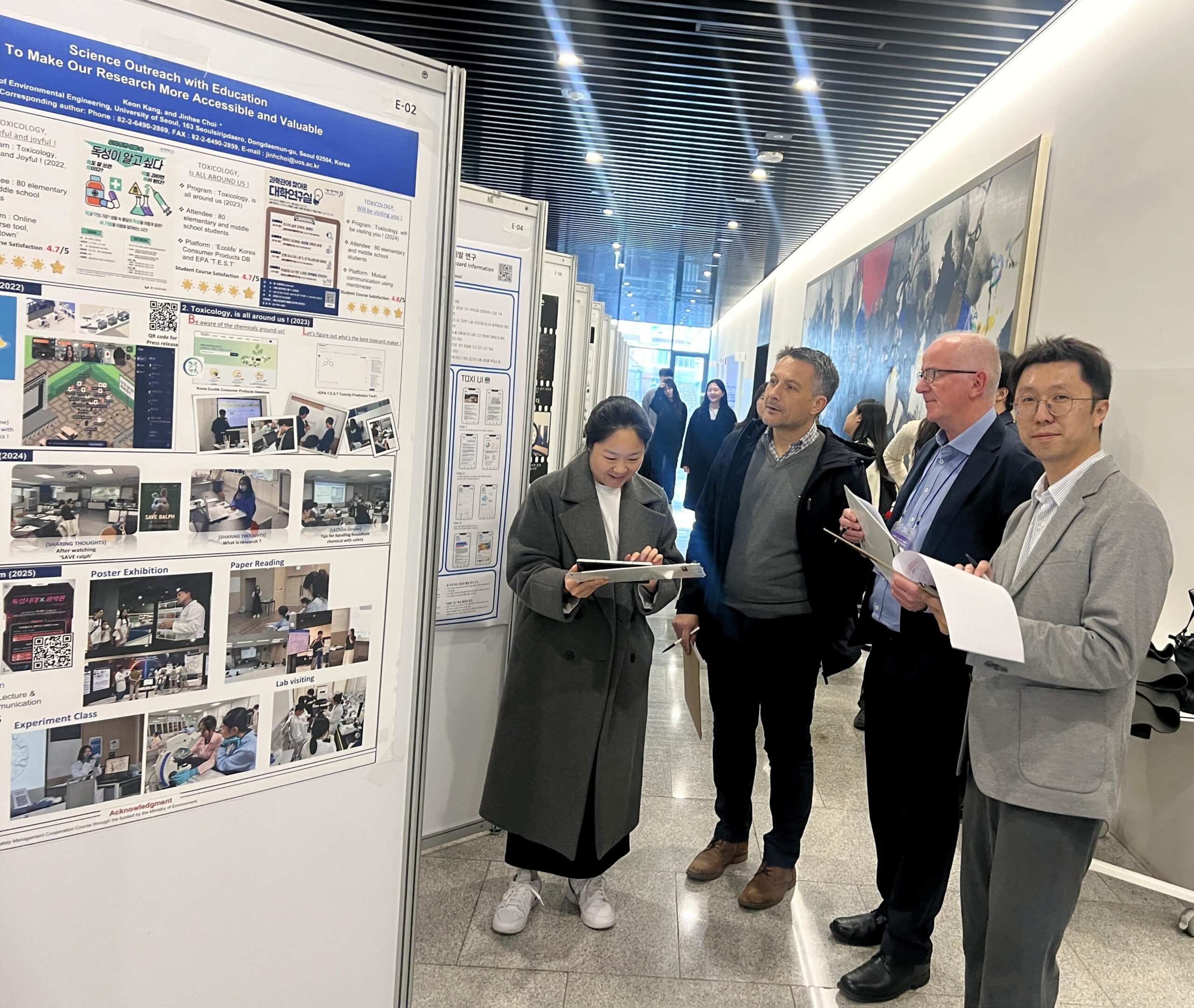
The Symposium also showcased the energy and curiosity of Early-Stage Researchers, who actively contributed to discussions and presented posters across multiple sessions — reinforcing the importance of engaging the next generation of scientists in shaping future chemical safety approaches.
Deep Appreciation for ONTOX, RISK-HUNT3R and PrecisionTox
Prof. Jinhee Choi (School of Environmental Engineering, University of Seoul) expressed deep gratitude for the EU delegation’s engagement:
“I would like to express my sincere appreciation for your participation in the ChemBAI 2025 Symposium and for the valuable contributions you provided throughout the event. Your presence greatly enriched the programme, and I am deeply grateful for the time and effort you dedicated to being with us.”
Her message echoed sentiments shared throughout the event: Horizon Europe ASPIS Cluster partners are playing a central role in advancing Korean–European cooperation in NAMs, NGRA, and digital toxicology.
Looking Ahead: A Shared Path Toward Human-Relevant, Non-Animal Chemical Safety
ChemBAI 2025 reinforced the ambition of Korean and European partners to work together toward globally connected, scientifically robust, and animal-free approaches to chemical safety assessment.
For ONTOX, RISK-HUNT3R, and PrecisionTox, the symposium served as another step in strengthening international collaboration — accelerating the uptake of science-driven, transparent, and AI-supported methods that reflect human biology and protect society more effectively.